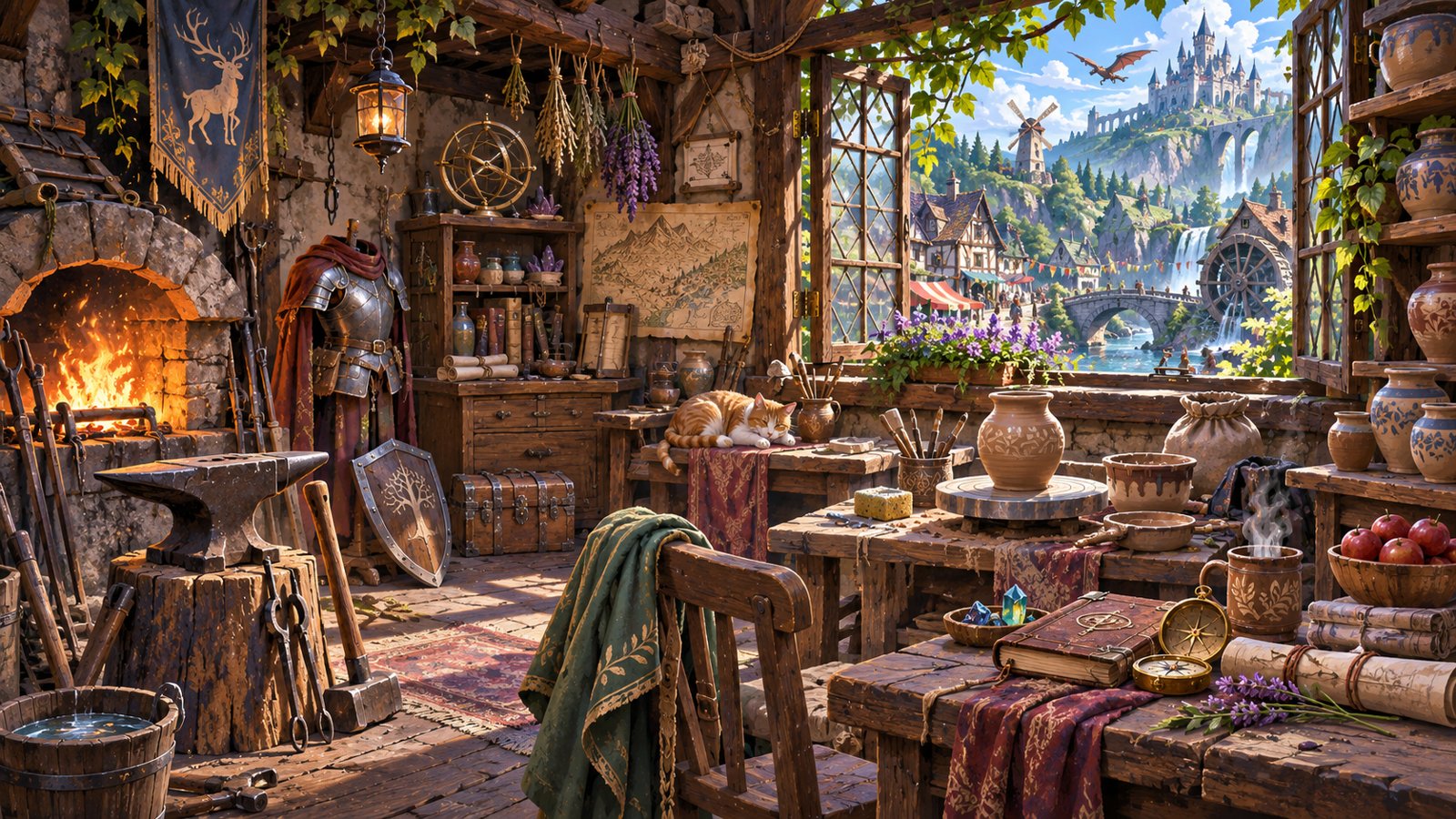
A world does not feel alive just because it is large. It can have a huge map, a dramatic skyline, and enough collectibles to keep a completionist occupied until retirement, yet still feel strangely empty.
Often the details that make a place memorable are much smaller: a workshop with tools left on the bench, a conversation overheard while passing a market, or a path worn through the grass because people actually use it.
Details should belong to somebody
Clutter works best when it suggests a purpose. A kitchen with dishes out tells us someone eats there. A guard post with a chair and a half-finished meal suggests that keeping watch takes time. Neither detail needs a quest attached to it.
Architecture can do the same work. A settlement built around a river might have storage near the water and homes farther uphill. An improvised shelter might use materials from the ruins around it. When the pieces fit together, the setting starts to feel like a place that existed before the player arrived.
Leave space for ordinary life
Not every conversation needs to explain the main story. People can complain about weather, worry about work, or disagree over where to have dinner. Those moments make high-stakes events more effective because they give us a sense of what could be disrupted.
The point is not to fill every corner with objects or make every character follow a complicated schedule. It is to choose details that invite the player to imagine life beyond the next objective. A few thoughtful touches can do more than a thousand identical barrels.
About the author

Able, Chief Editor
Able has spent six years reviewing games and following the stories around them. He focuses on what changed, what is worth a player’s time, and the context that gets lost in the announcement cycle.
Read this editor’s profile