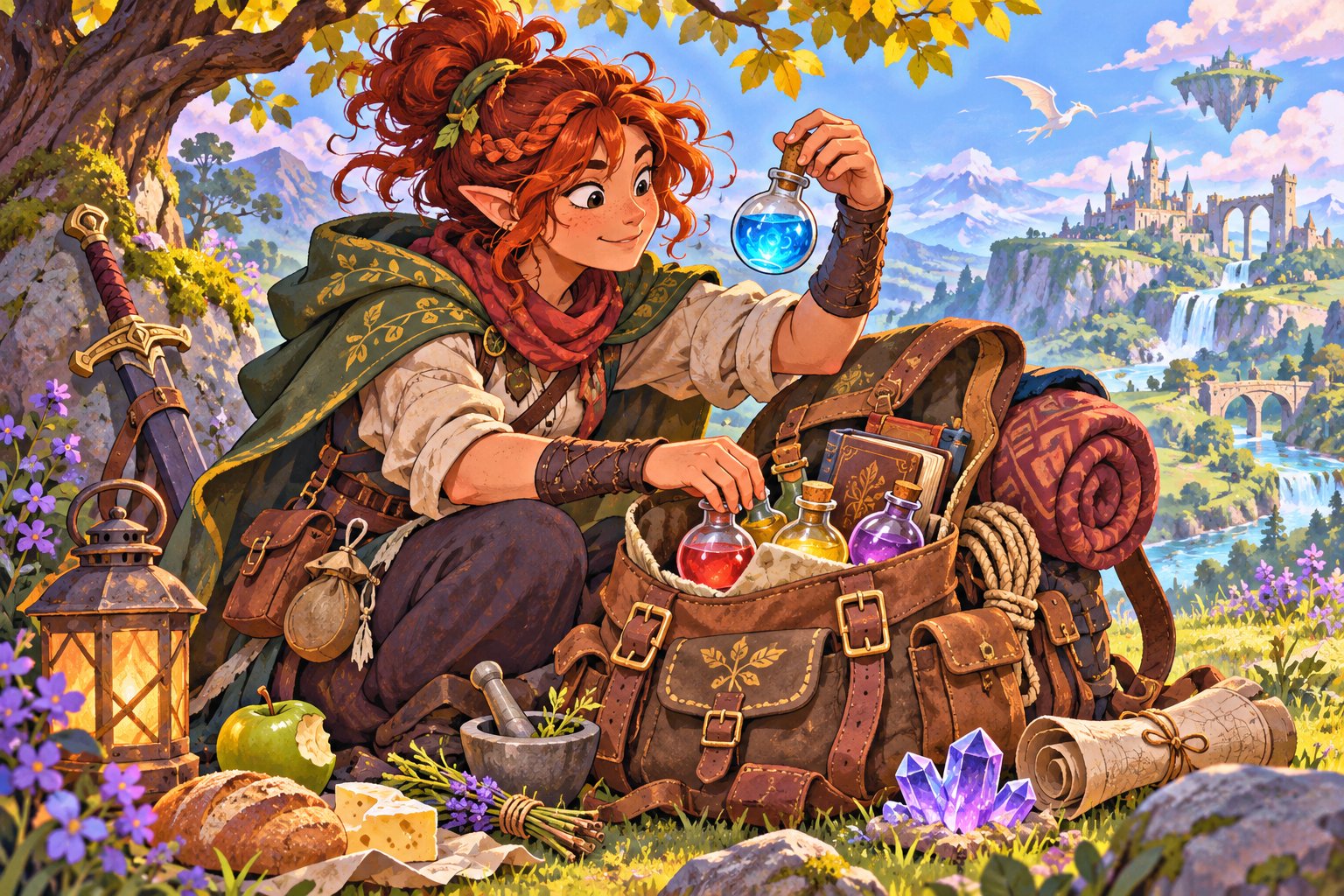
You have found a new sword. It is better than the one you are carrying, which should make this an easy decision. Unfortunately, your bag is full of herbs, crafting materials, three old helmets, and a mysterious key you are afraid to throw away.
Inventory management can be a satisfying puzzle. It can also make you wonder why your fantasy adventure has become a shift at a warehouse.
Limits can make choices interesting
A small bag can force a player to prepare. Do you bring healing items, extra ammunition, or space for whatever you find? In a dangerous dungeon, the decision to leave with what you have or push onward can create tension.
The problem is repetition. If the same choice appears every five minutes, it stops being a dilemma and starts being housekeeping. A weight limit is not automatically meaningful just because a number turns red.
Give us useful tools
Sorting, clear item descriptions, storage access, and sensible ways to mark favorites can remove frustration without eliminating the challenge. A game can ask players to make decisions while helping them understand what they own.
The best inventory systems also know what their game is about. A survival adventure may benefit from scarcity. A sprawling RPG with hundreds of story items needs a way to stop important objects disappearing into the pile.
And to the developers who let us sell every unwanted item at once: thank you. We will still keep that sword we might need later. Some problems are beyond the power of an interface to solve.
About the author

Able, Chief Editor
Able has spent six years reviewing games and following the stories around them. He focuses on what changed, what is worth a player’s time, and the context that gets lost in the announcement cycle.
Read this editor’s profile