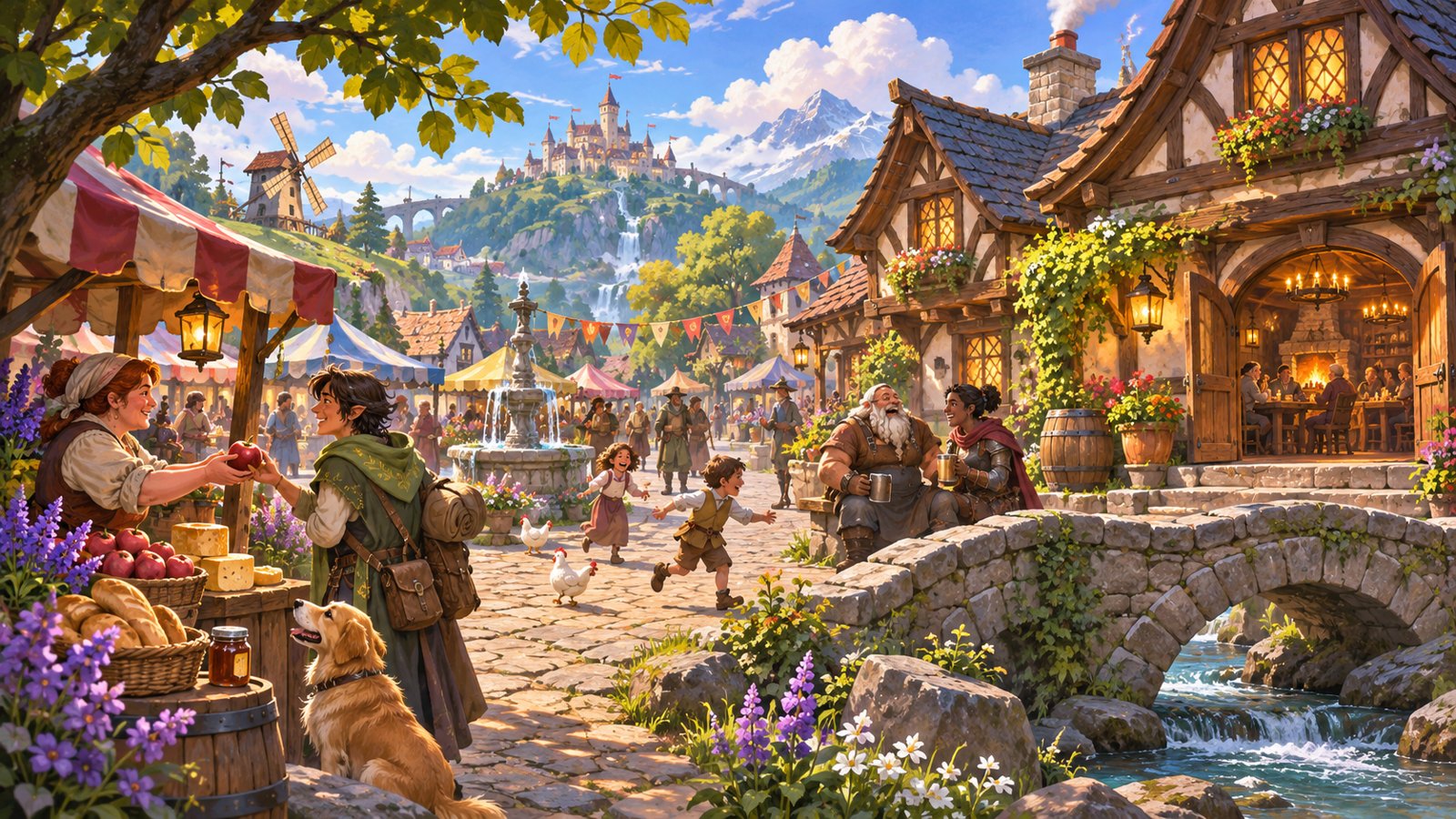
Before an RPG asks you to save a kingdom, it often asks you to find the inn. You meet a merchant, hear a rumor, wander into someone's house, and discover that the locals have problems they cannot solve by waiting for a chosen hero.
A first town can make a big world feel personal. It gives the player a place to understand before the map starts expanding in every direction.
A small place can teach a large game
A shop introduces equipment and money. A conversation can show how choices work. A locked door hints that not every problem has a solution yet. These lessons are easier to remember when they belong to a place rather than a tutorial box.
The town also establishes a game's priorities. Are people worried about the war outside the walls, or more concerned about a missing pet? Does everyone know one another? Are strangers welcome? The answers give the setting a texture that a paragraph of history cannot always provide.
Give us a reason to come back
The best opening settlements do not need to be enormous. A handful of recognizable characters and a useful landmark can be enough. Returning later and seeing a familiar face, or noticing that an earlier decision had an effect, can make the journey feel connected.
A first town is a promise about the rest of the adventure. It says that the world contains people with routines, worries, and stories of their own. Once we care about those people, the distant threat has somewhere to land.
About the author

Able, Chief Editor
Able has spent six years reviewing games and following the stories around them. He focuses on what changed, what is worth a player’s time, and the context that gets lost in the announcement cycle.
Read this editor’s profile