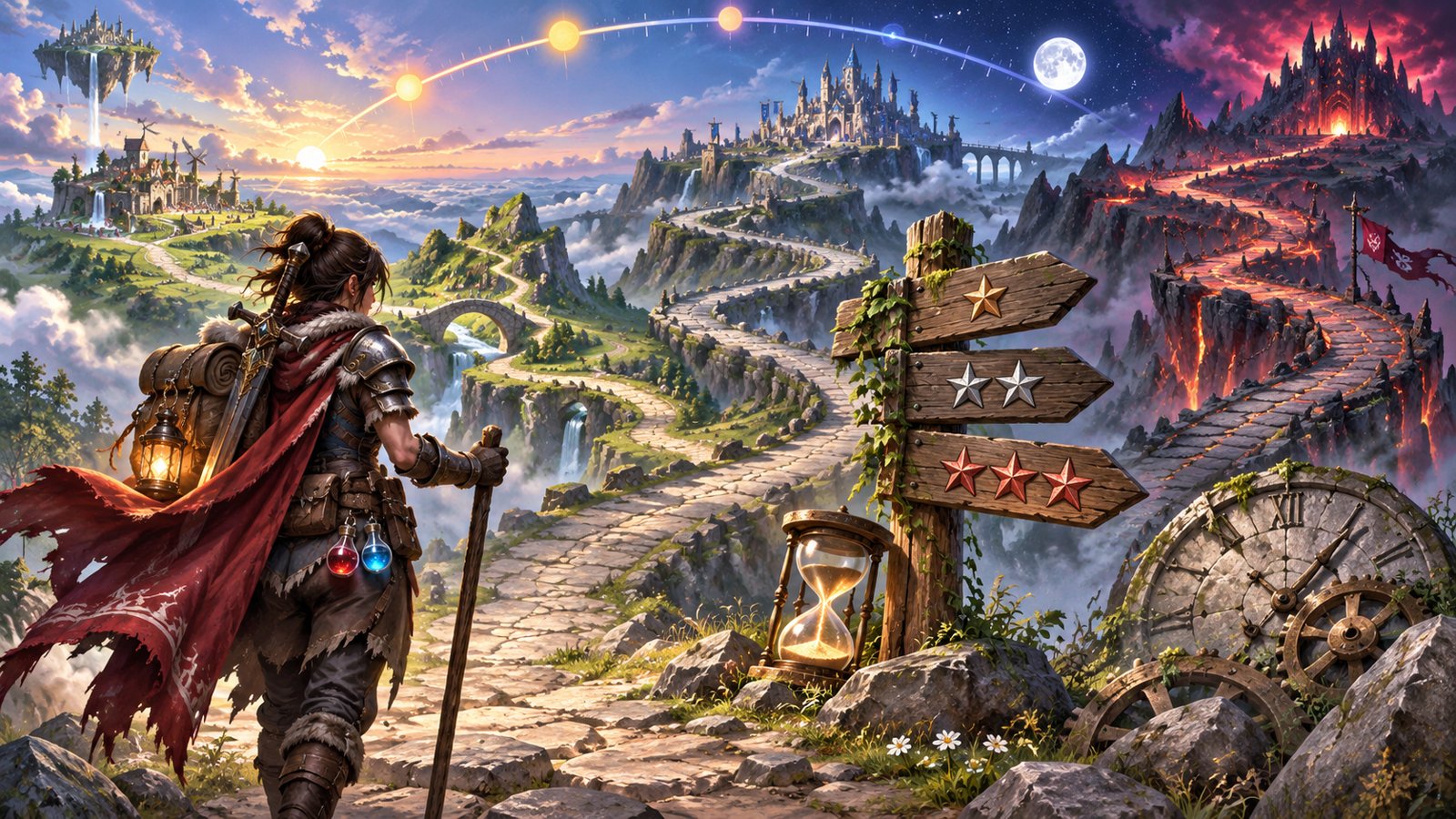
A long journey across an MMO world can be an adventure. It can also be ten minutes spent watching a character run down a road you have already crossed twenty times.
Both things can be true, sometimes in the same evening. That is why the debate over convenience in online worlds is more interesting than a simple choice between old and new.
A little resistance can create a story
When travel takes planning, a remote dungeon feels like a destination. When a difficult encounter encourages players to ask for help, a stranger can become a useful ally. When a defeat carries a consequence, surviving the next attempt can feel more meaningful.
Those moments depend on the obstacle leading somewhere. A walk that introduces a dangerous area or brings a group together does something different from a repeated commute through empty terrain.
Ask what the player is doing during the wait
A useful test is whether the time spent creates a decision. Are you choosing a route, watching for danger, talking to the people in your party, or preparing supplies? Or are you waiting for a timer to finish before you can do the part you enjoy?
Convenience does not have to erase a world. A game could ask players to discover a place on foot before allowing faster travel later. It could make assembling a group easier while leaving the dungeon itself demanding. It could explain a system clearly without deciding every step for you.
The best friction makes the next choice more interesting. The worst simply stretches the distance between choices. Respecting a player's time means understanding the difference.
About the author

Able, Chief Editor
Able has spent six years reviewing games and following the stories around them. He focuses on what changed, what is worth a player’s time, and the context that gets lost in the announcement cycle.
Read this editor’s profile