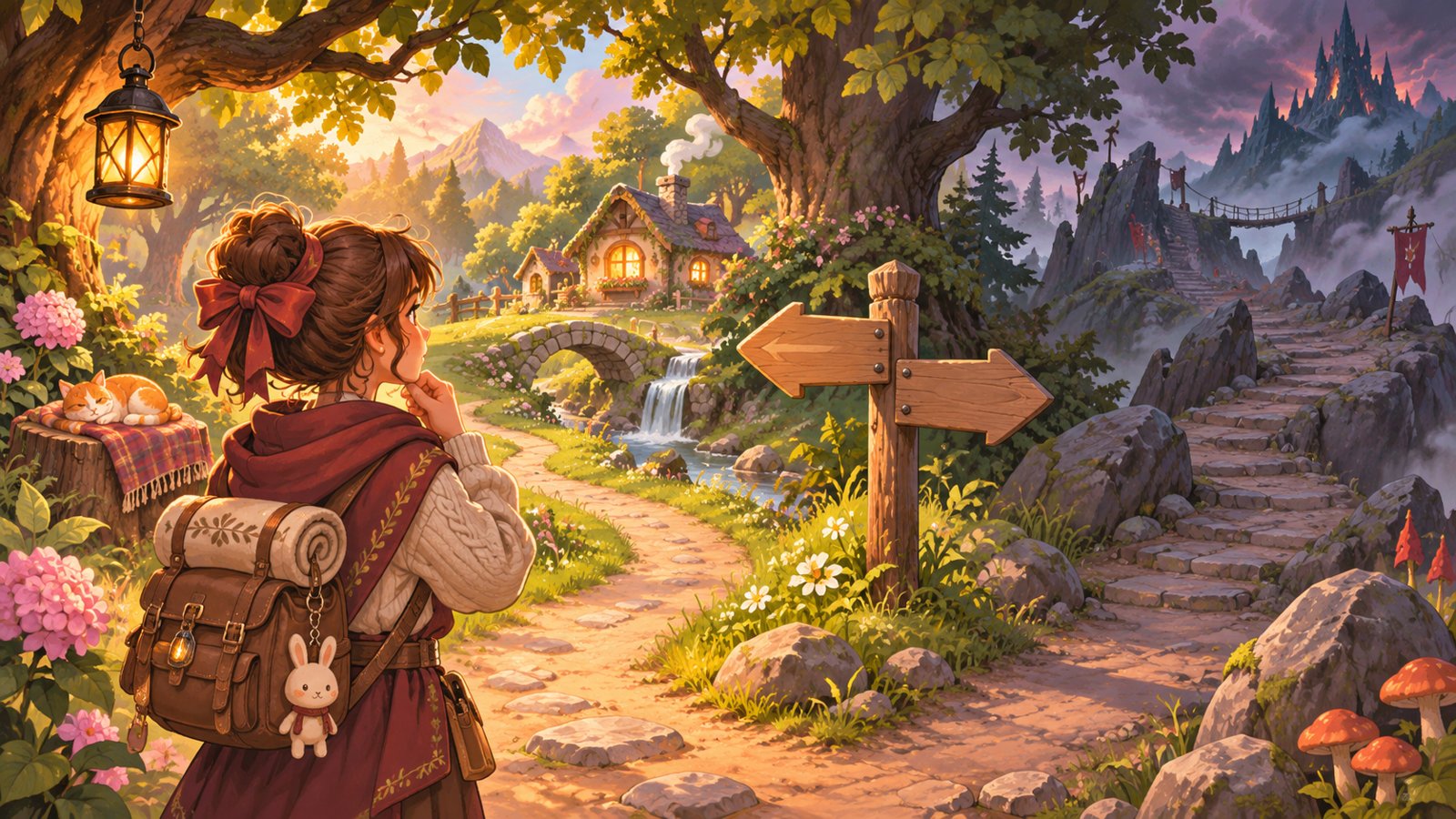
You reach the boss. The music swells. Your party has spent hours following clues and making difficult choices. Then the boss defeats you for the sixth time, and the evening becomes an argument with a loading screen.
For some players, that is where the fun begins. Learning an enemy's patterns and finally winning can be one of the best feelings in a game. For others, the fight is a locked door between them and the story they came to see.
If a game offers a lower difficulty, using it is a perfectly good choice.
Decide what you want from this adventure
RPGs ask for different kinds of attention. You might enjoy experimenting with builds, exploring every corner, meeting characters, or finding out what happens when a conversation goes badly. A difficult battle system can make those choices feel consequential, but it can also take more time and energy than you have available.
Lowering the difficulty can make room for the parts you care about. It can also help you learn a new system before trying a harder setting later. Neither option makes your experience less valid.
Check what the setting actually changes. Some games alter enemy health or damage; others change resources, enemy behavior, or accessibility features. Not every game lets you change difficulty freely, and some tie achievements or other rewards to a setting. If those matter to you, look before committing.
There is no prize for turning your leisure time into an obligation. Pick the challenge that keeps you interested, and remember that you can always change your mind if the game allows it.
About the author

Able, Chief Editor
Able has spent six years reviewing games and following the stories around them. He focuses on what changed, what is worth a player’s time, and the context that gets lost in the announcement cycle.
Read this editor’s profile