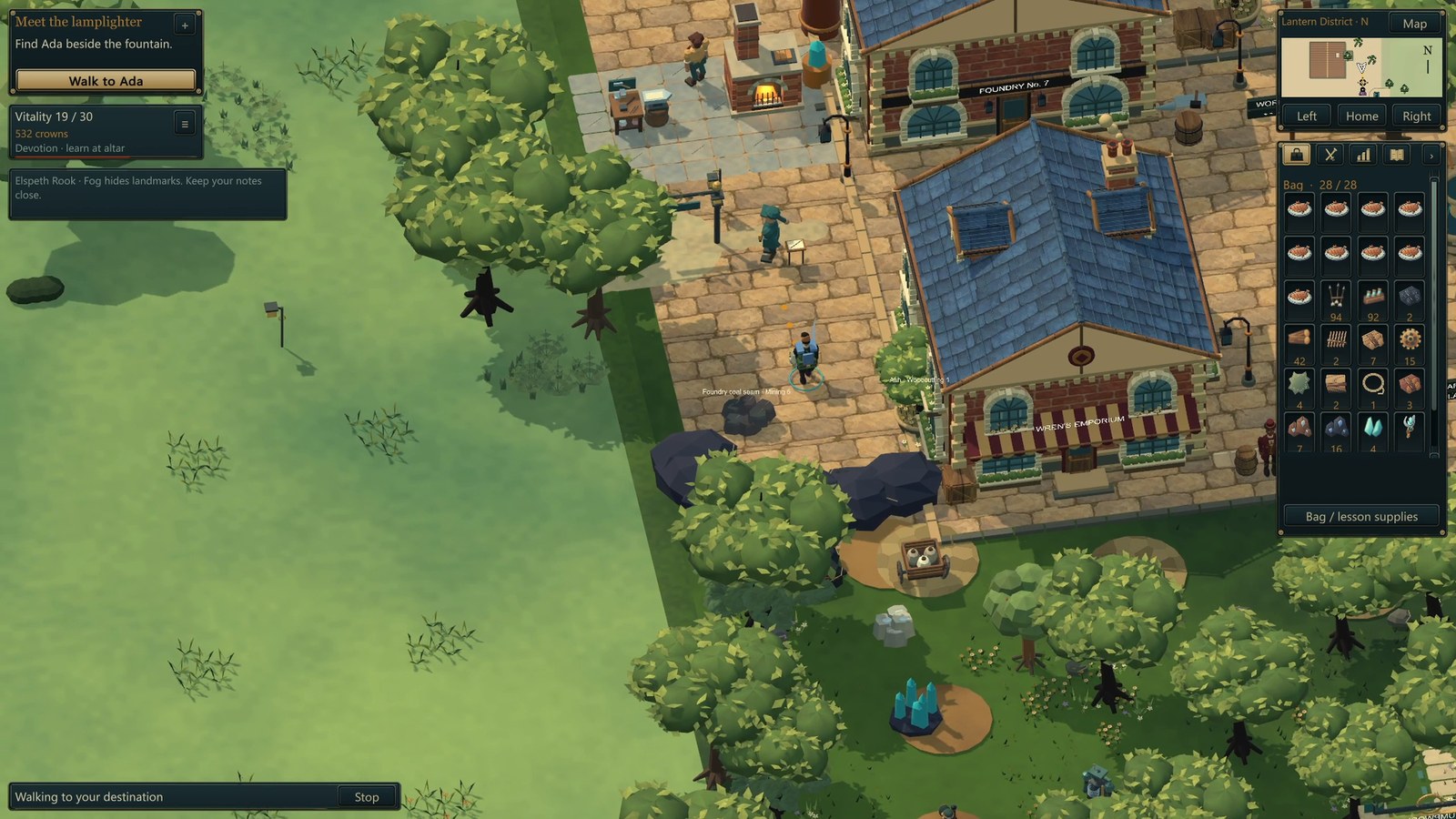
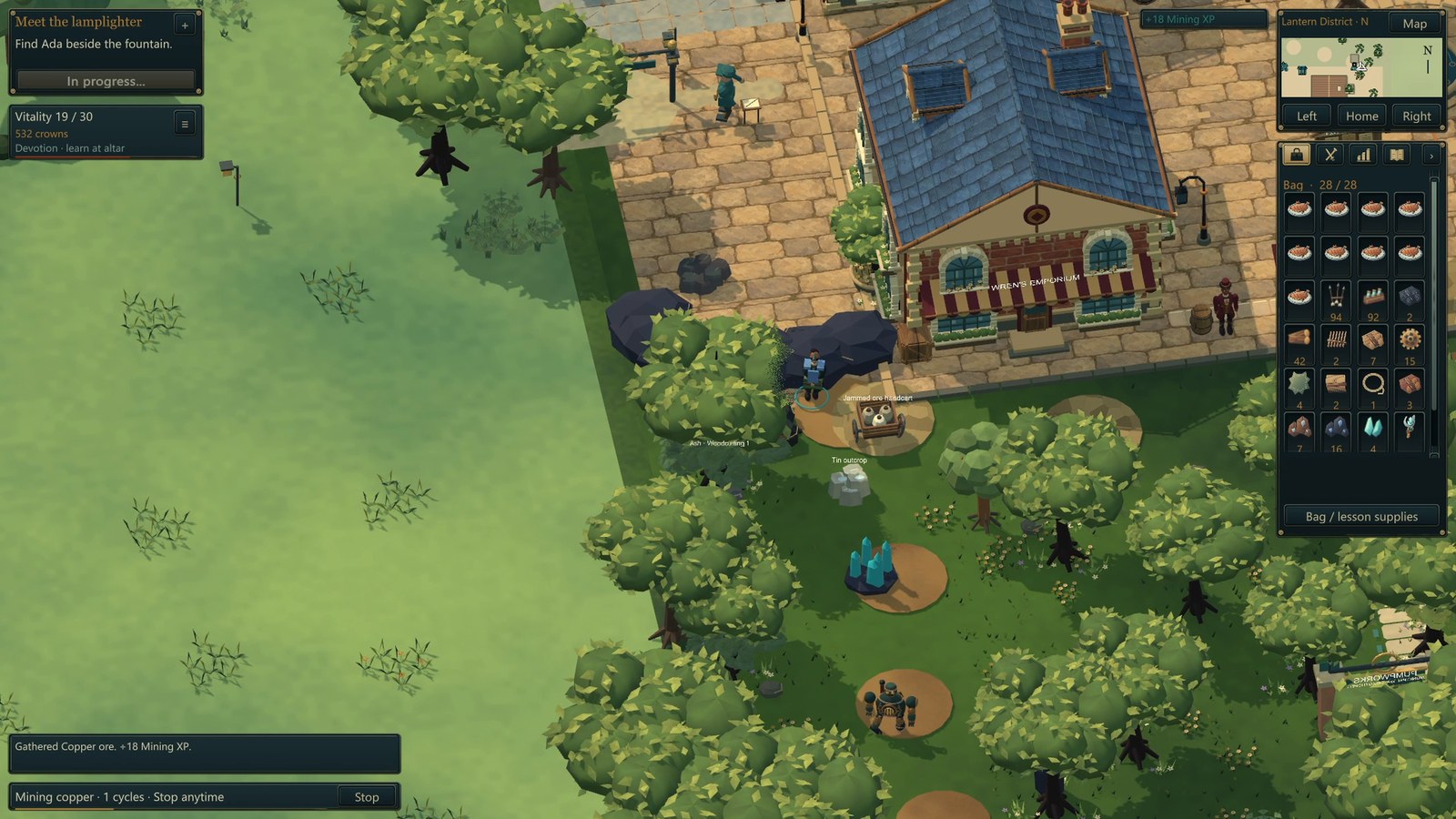
Wildercrown is pitching an old-school MMO built around a familiar chain of small ambitions: gather something, turn it into better equipment, and head somewhere riskier. Talk Alice Labs’ current Windows prototype includes 15 skills, gathering, crafting, quests and dungeon combat. Its less familiar addition is an in-game stock market, with shares in 50 fictional companies traded using crowns. [1]
That is the feature most likely to give this particular skilling pitch a different shape. A player economy already asks people to think about time and resources. A stock exchange adds a different question: what do you expect to become valuable, and why?
Another route through progression
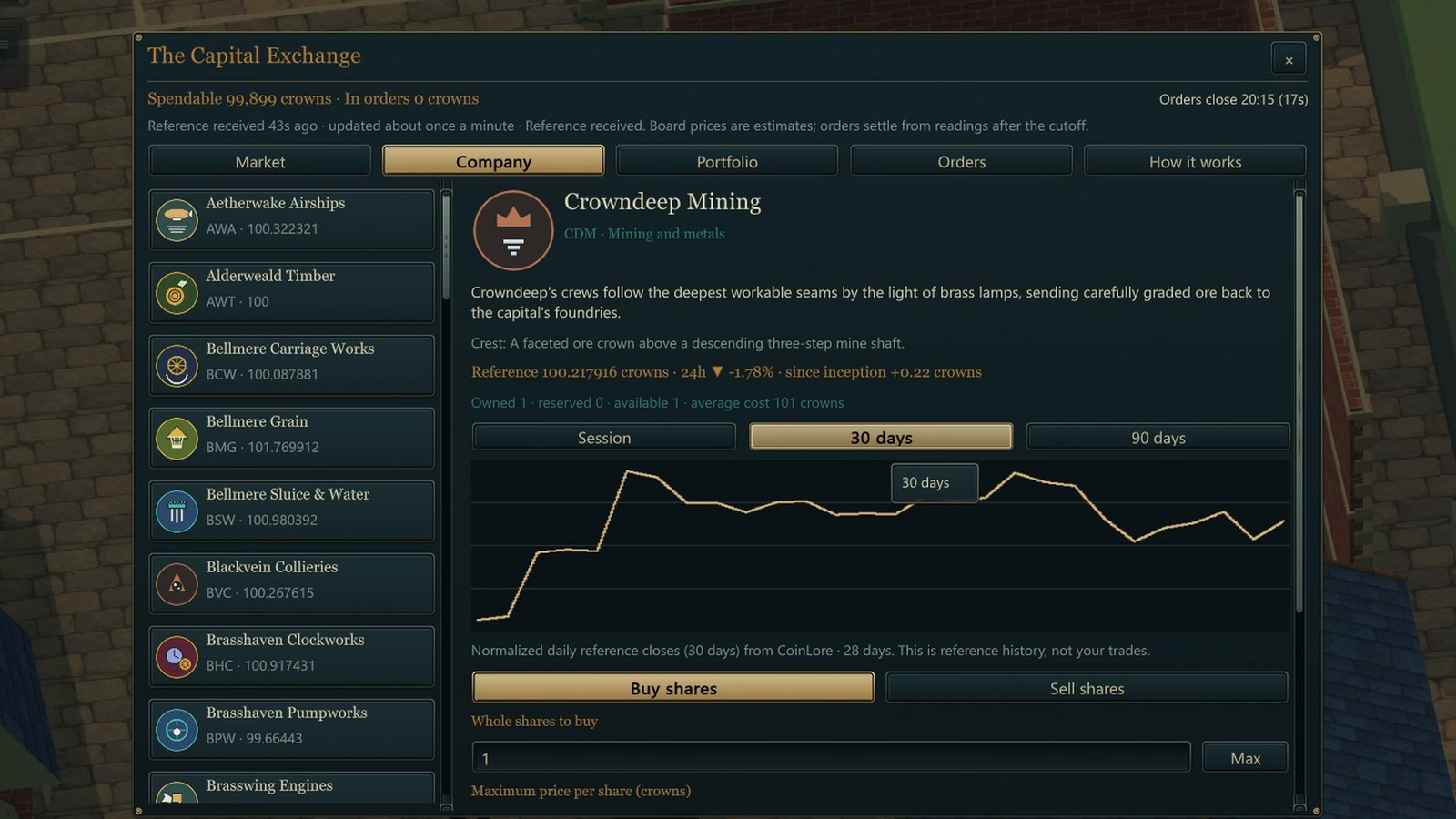
The prototype’s exchange includes charts, orders and a portfolio of fictional shares. The official website describes an economy built around public company data and a developer-run central bank. Those are the team’s descriptions of the system and its direction, rather than evidence of a mature live economy. [1][2]
The attraction would be a second kind of long-term project. A player who enjoys gathering can recognise progress in a growing stockpile or a newly crafted item. A player attracted to trading might find it in a developing idea about where to put their in-game money.
For the exchange to belong in the same world, the two activities need an understandable relationship. If useful information is available through play and presented clearly, trading could offer another way to engage with the setting. If the important signals are obscure, it risks becoming a separate interface that only a small group understands.
That is a design question rather than an objection to having a market. Economic complexity becomes more inviting when players can explain why an outcome happened. A chart can show movement; the world around it needs to help supply meaning.
The prototype and the MMO are different measures
Planned features include 50-player raids, ten-player Underground Mines expeditions, kingdom warfare, player housing, pets and mounts. These belong to the full MMO roadmap and are still in development. [1]
That distinction is useful. A prototype can show how gathering, equipment and the exchange fit together without establishing how a persistent multiplayer population will behave. The latter adds problems of scale, fairness, communication and the effects of many players making decisions at once.
For readers following development, the meaningful next evidence would be sustained demonstrations of those connections. What information can a new player understand? How does a crafting goal interact with the economy? What does playing together add to an otherwise individual progression loop?
Those questions are more useful than treating the largest numbers on a roadmap as the current game. The smaller systems are where an MMO’s daily habits start, and daily habits are what keep a shared world occupied between major events.
Crowdfunding needs a concrete next step
Wildercrown remains in development for Windows first, with mobile planned later. The official site says its Kickstarter is at the pre-launch stage, with a proposed CA$50,000 goal and planned membership at CA$15 per month. A campaign launch date and game release date have not been announced there. [1][2]
We are sceptical about how readily players will commit to CA$15 a month for a game at this stage. A subscription asks for more than initial curiosity: it needs to earn a place in someone's regular gaming budget. We could be wrong, and a compelling world could find a dedicated audience, but the current pitch still has work to do to make that monthly commitment attractive.
The team also intends to seek at least 66% approval for most proposed features after launch. [2] We are cautious about putting too much design direction to a vote. Players can favour changes that make their immediate goals easier, even when the friction being removed gives those goals their value. If successive votes keep reducing the challenge, an MMO risks losing the reasons to master its systems in the first place. The developers need to be careful about which decisions go to players and which require a firm design vision.
At this stage, the most interesting reason to follow Wildercrown is the relationship between its familiar and unfamiliar parts. Skilling gives the world an accessible foundation. The exchange could give players a different ambition within it.
The exchange could offer a different kind of conquest: learning how the economy works, spotting opportunities and using that knowledge to gain influence over the market. For players who enjoy mastering a complicated system, there is real excitement in understanding it well enough to thrive. That is where Wildercrown's economic ambition becomes interesting: the possibility of building a fortune through knowledge, patience and well-judged decisions.
Sources and reporting
- Wildercrown press kit — Talk Alice Labs. Published or updated: October 2026. Supports: Current Windows prototype, 15 skills, fictional stock market, planned MMO features, media labels and trailer production notes.
- Wildercrown | Official MMO Website — Talk Alice Labs. Published or updated: date not listed. Supports: Current development status, Kickstarter pre-launch, prospective campaign goal/membership, economic plans and planned player voting.
About the author
Able, Chief Editor
Able has spent six years reviewing games and following the stories around them. He focuses on what changed, what is worth a player’s time, and the context that gets lost in the announcement cycle.
Read this editor’s profile