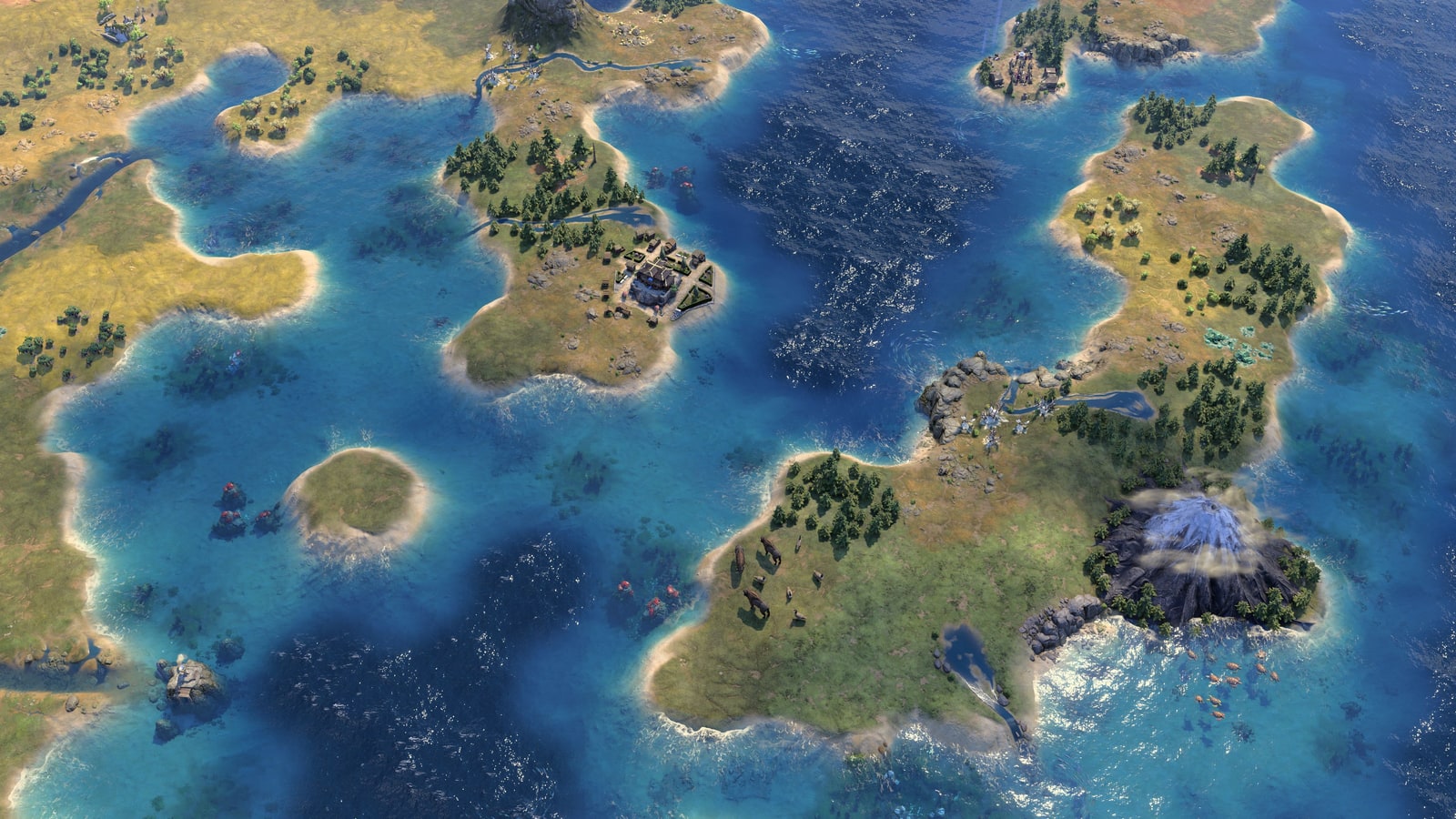
Civilization VII’s True Start Location Earth map arrived with Update 1.5.0 on September 15. It offers the familiar appeal of beginning in a recognizable place, then seeing how badly everyone can rearrange history. The more interesting detail is that Firaxis did not treat literal geography as the highest priority. [1]
The map is handcrafted at Huge scale, with campaigns beginning in Antiquity and civilizations placed according to historical starting locations. Firaxis has shortened less useful stretches of tundra and ocean and enlarged some crowded or constrained regions. Its development explanation describes a process of making space for a playable campaign rather than reproducing every proportion exactly. [1][2]
That is a sensible compromise. A recognizable coastline gives players a frame of reference. It does not automatically give several neighbouring civilizations enough room to make interesting choices.
History needs somewhere to stand
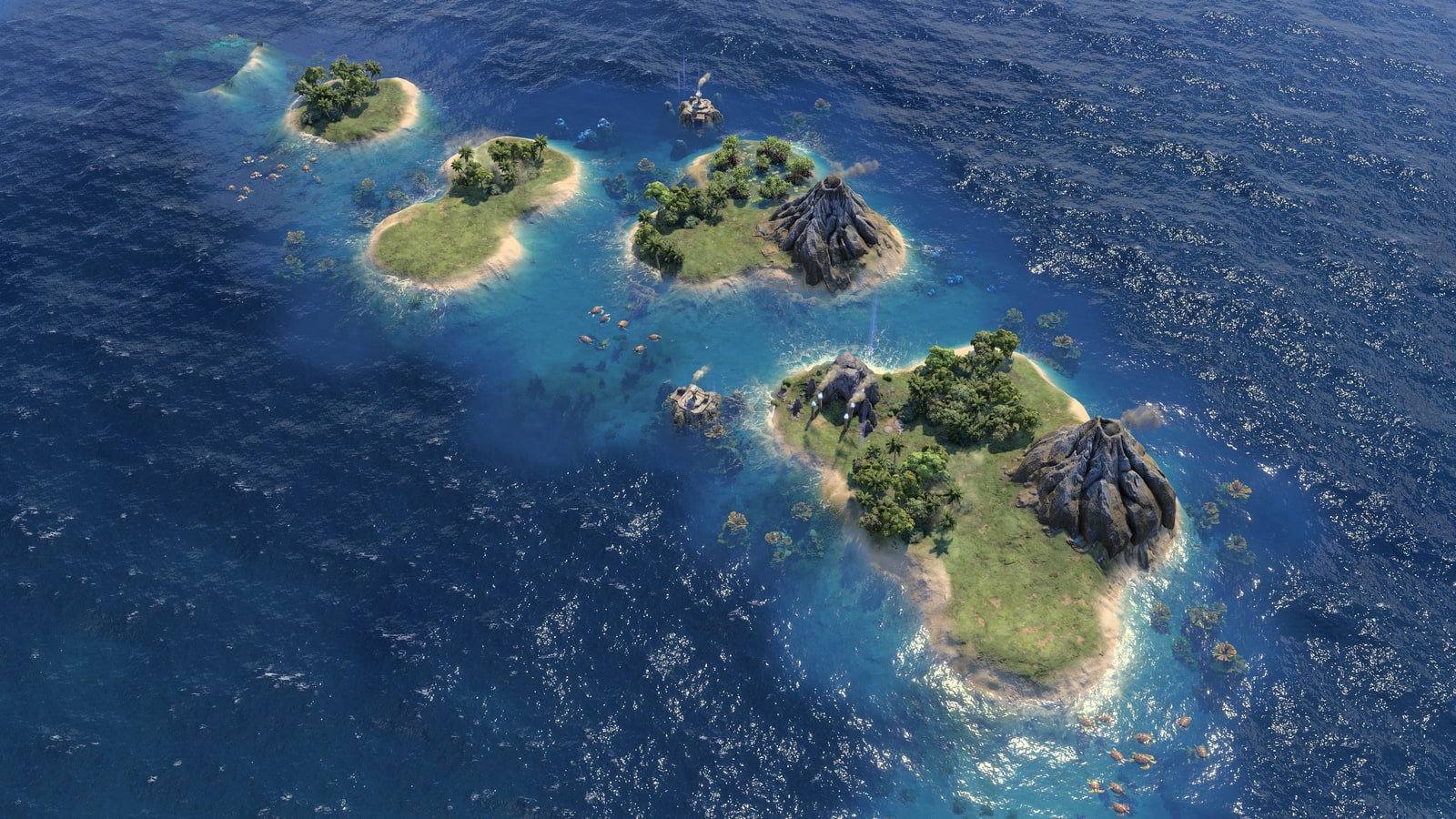
The September 9 design article explains that islands including Japan, Hawaii, and the UK were enlarged to support their starting locations. Where starts collide too closely, the game can move a civilization to another unused historical start; the developers say a single-player human keeps their own location, while multiplayer conflicts follow player order. [2]
That produces a different kind of authenticity. The map preserves an association between a civilization and its home while acknowledging that a strategy game needs opportunities the real world did not distribute evenly.
A perfectly proportioned island can become a poor starting position if the game’s settlement systems need more room than its scale provides. Enlarging it is not merely making life easier. It lets the location participate in the same underlying rules as its neighbours.
There is an appealing tension here for repeat players. Recognizable geography reduces some uncertainty, so the game needs to preserve other reasons to adapt. The design article says seven Natural Wonders are selected from a pool while retaining their real-world locations. You know the planet, but not every opportunity it will offer. [2]
Neutrality becomes a recurring expense
Update 1.5.0 also lets players pay Influence to avoid joining an ally’s war while maintaining the alliance. At Standard speed, the choice returns every ten turns. It does not apply when two of your own allies fight each other. [1]
That is a useful example of turning an awkward interruption into an ongoing strategic decision. A player who wants to keep building can now weigh the cost of remaining outside the conflict against the value of the relationship.
The recurring payment is the important part. Without it, neutrality could become a button that removes an alliance’s inconvenient side indefinitely. A repeated cost asks whether the arrangement still serves your plans as the war develops.
For multiplayer, it could also make a diplomatic relationship less binary. Supporting an ally does not have to mean immediately sending an army, but staying uninvolved is no longer costless. Whether the price is right requires actual campaigns and balancing evidence; the shape of the choice is promising on paper.
A map is only useful if the campaign holds together
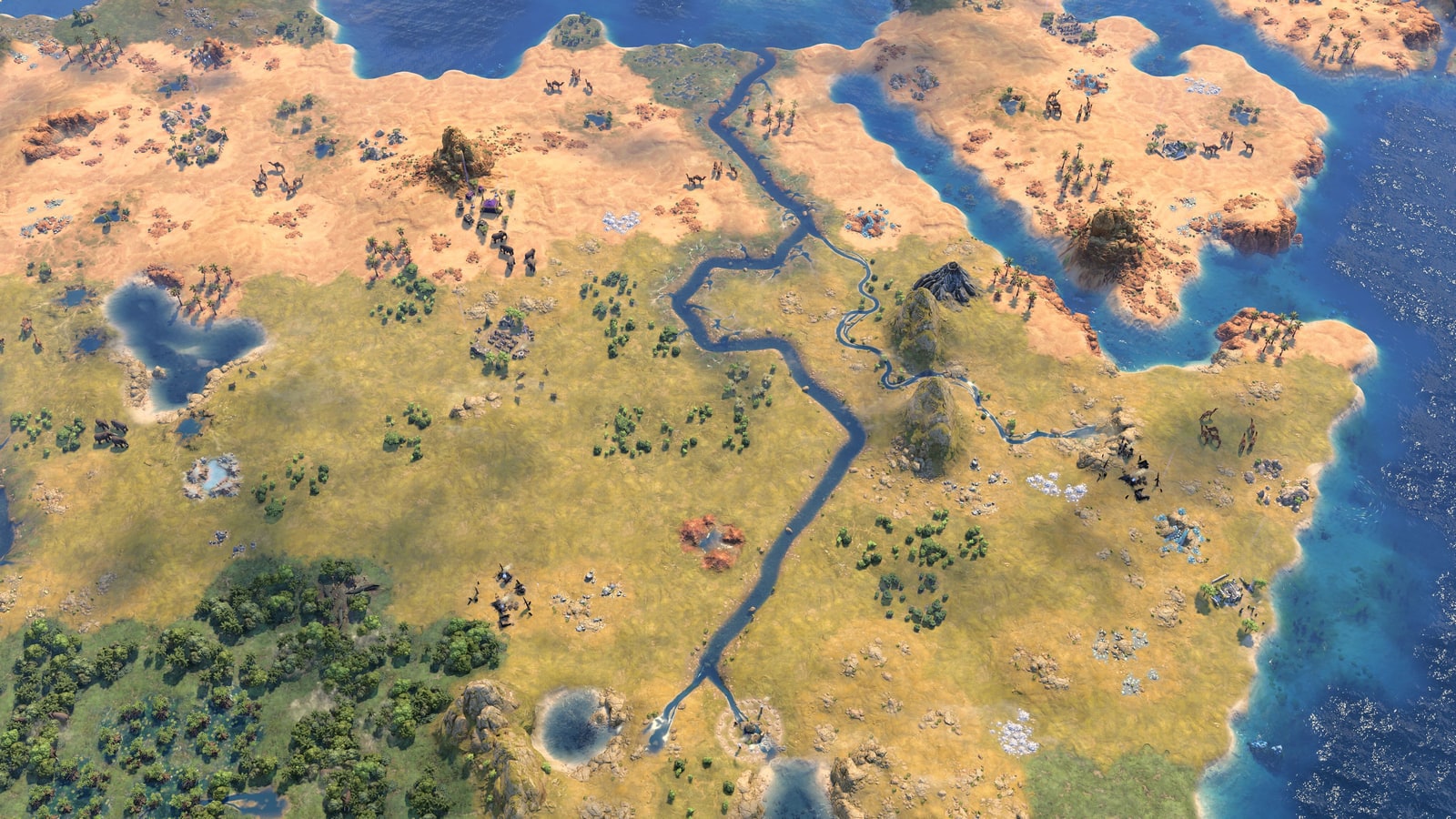
The September 30 hotfix addresses late-game Modern Age crashes, multiplayer turn-advancement softlocks, and problems with certain resources appearing. Firaxis also corrected issues on the Earth map itself. These are developer-reported fixes, not a guarantee that every affected save or hardware configuration is now problem-free. [3]
They matter because strategy games ask for extended trust. A player can spend hours developing a plan whose payoff arrives much later. A technical failure near that payoff has a different weight from a brief inconvenience during setup.
For returning players, it is worth distinguishing a reason to start a new campaign from a verdict on the whole game. A map can be an excellent prompt to return without resolving every concern someone had about progression, pacing, or the endgame. Our interest here is in these particular design choices, rather than a claim that one update has settled the broader debate.
Leave next year’s promises in next year
Firaxis has separately announced the free Arc of Tomorrow update and the paid Earthrise expansion for 2027. Its September recap says Arc of Tomorrow adds a fourth, Atomic Age. Those plans are not features of the September build players can install today, and the paid content should not be confused with the free update. [4]
The current Earth map deserves attention without borrowing excitement from those future releases. It asks a familiar strategy question in a tangible way: how much should a designer change the board so that players can make something interesting happen on it?
Firaxis’s answer is visible in the land it expanded, the empty space it removed, and the diplomatic option it added. The goal is room to act. For a game about building an empire, that is a more useful starting point than geographic purity for its own sake.
Sources and reporting
- Update 1.5.0 Notes - September 15, 2026 — Firaxis Games / 2K via Steam. Published or updated: September 15, 2026. Supports: Earth map release and setup, and Influence payments for neutrality, timing, and alliance-conflict exception.
- From the Devs: True Start Location Earth Map — Firaxis Games / 2K via Steam. Published or updated: September 9, 2026. Supports: Geographic design compromises, island scale, conflicting start handling, and Natural Wonder selection.
- Update 1.5.0 Hotfix - September 30, 2026 — Firaxis Games / 2K via Steam. Published or updated: September 30, 2026. Supports: Reported crash, multiplayer turn, resource, and Earth-map corrections.
- This Month in Civ: PAX Recap, Update 1.5.0, and the future of Civ VII — Firaxis Games / 2K via Steam. Published or updated: September 30, 2026. Supports: 2027 timing and free-versus-paid distinction for Arc of Tomorrow and Earthrise; planned fourth Age.
About the author

Able, Chief Editor
Able has spent six years reviewing games and following the stories around them. He focuses on what changed, what is worth a player’s time, and the context that gets lost in the announcement cycle.
Read this editor’s profile