
The core would like more wood
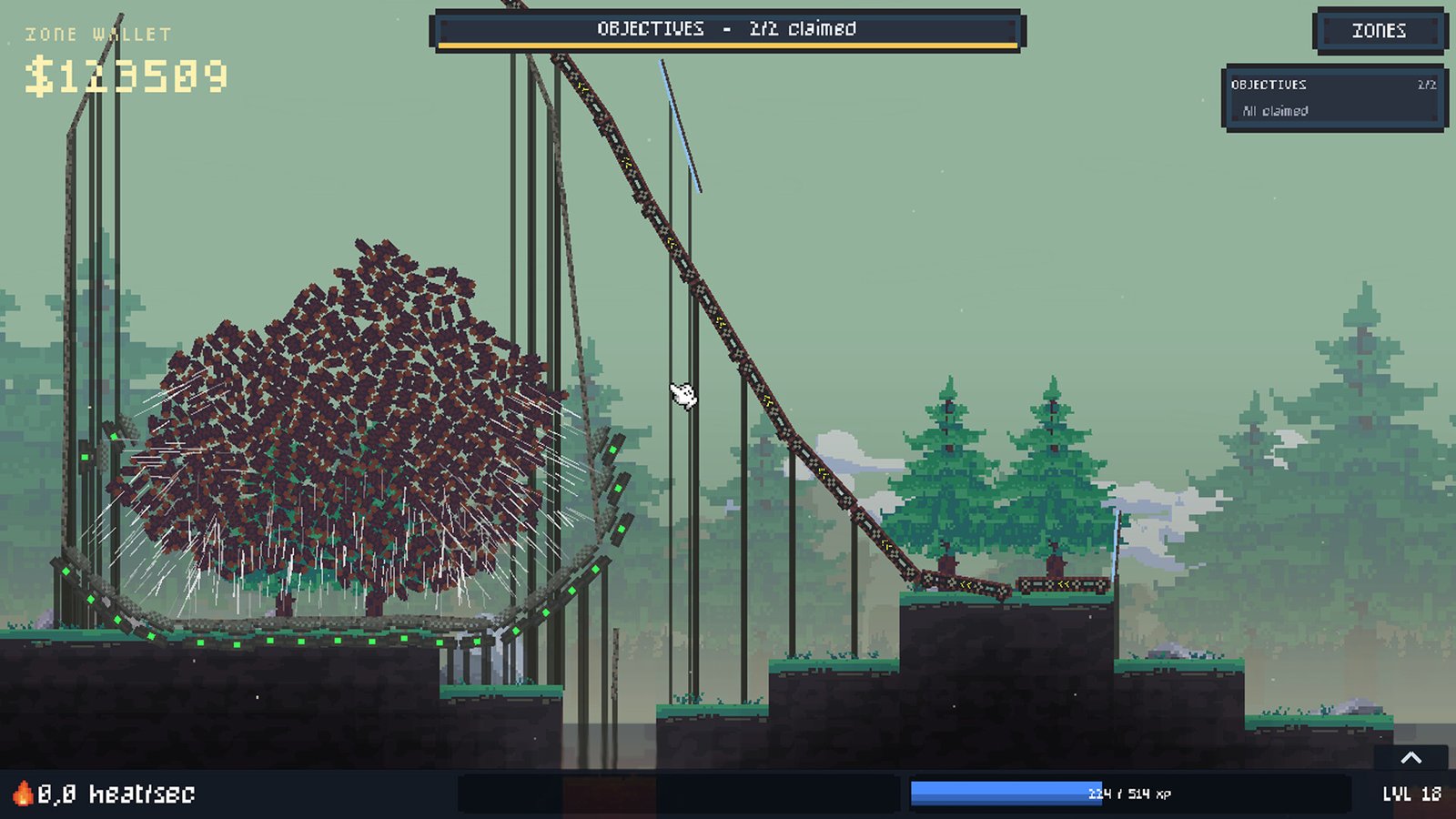
Log Drop is a 2D physics and automation game from self-published independent developer Who Nose Studios. Its Steam Next Fest demo revolves around harvesting trees and getting the logs into the earth's core. A steady trickle works, but the premise encourages players to think in much larger, less sensible quantities.
Let gravity join the production line
Funnelling, flinging and holding back timber turn the route into a contraption rather than a simple delivery belt. Tools and upgrades expand the options, while the campaign gives different zones their own objectives. The interesting work is deciding when to release a pile and how to keep the cascade pointed towards its destination.
For builders who enjoy watching their plans move
The charm is that the machine's output is also the spectacle. An efficient layout can be satisfying, but a barely controlled flood of logs may be entertaining for a different reason. Log Drop looks like a worthwhile demo for players who enjoy automation games with physical objects capable of making a mess of the plan.
Playable demo: Yes — Download the Log Drop demo on Steam.
Sources and reporting
- Log Drop — Who Nose Studios / Steam. Published or updated: date not listed. Supports: developer and publisher credits, advertised game premise and features, and Next Fest demo.
- Log Drop Demo — Who Nose Studios / Steam. Published or updated: date not listed. Supports: released, free playable demo and download destination.
- Log Drop — official developer website — Who Nose Studios. Published or updated: date not listed. Supports: official developer and game information.
About the author

Able, Chief Editor
Able has spent six years reviewing games and following the stories around them. He focuses on what changed, what is worth a player’s time, and the context that gets lost in the announcement cycle.
Read this editor’s profile